
Pile testing · Soil investigation · Site monitoring
What stands above starts below.
Know what’s beneath your site, how your piles perform, and what’s happening around them.
Your schedule doesn’t wait.
Neither do we.
10,000+
Projects tested
500+
Clients served
2000
The year we started
Every result matters to someone’s next decision.
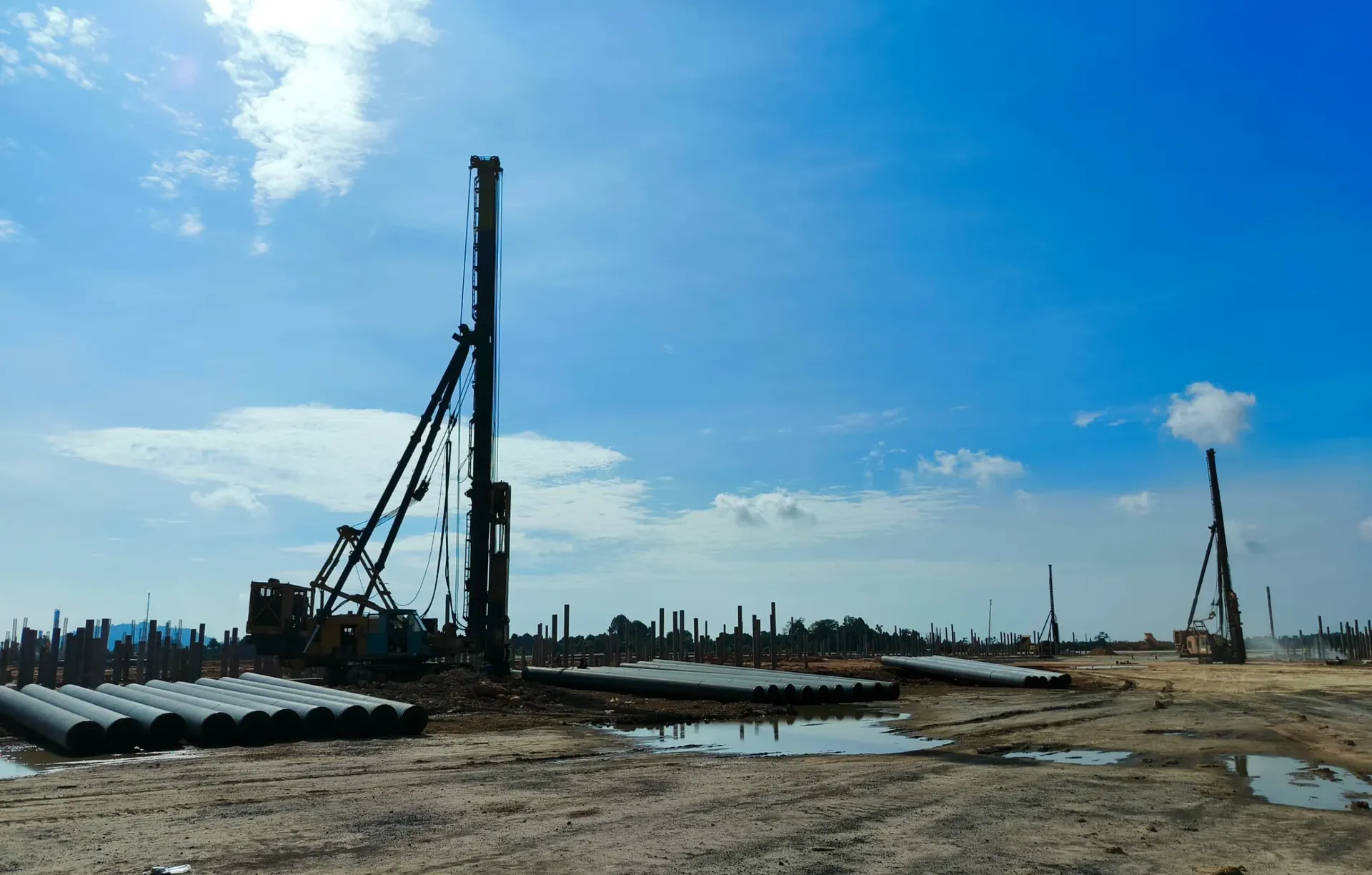
We test what
the drawings
assume.
Your team has a programme to follow and practical questions to answer. Our part is to test, observe and help make sense of what’s happening on site.
We mainly work with piling contractors and main contractors across Peninsular Malaysia.
Our people. Our equipment. From site to report.
Care in the
small details.
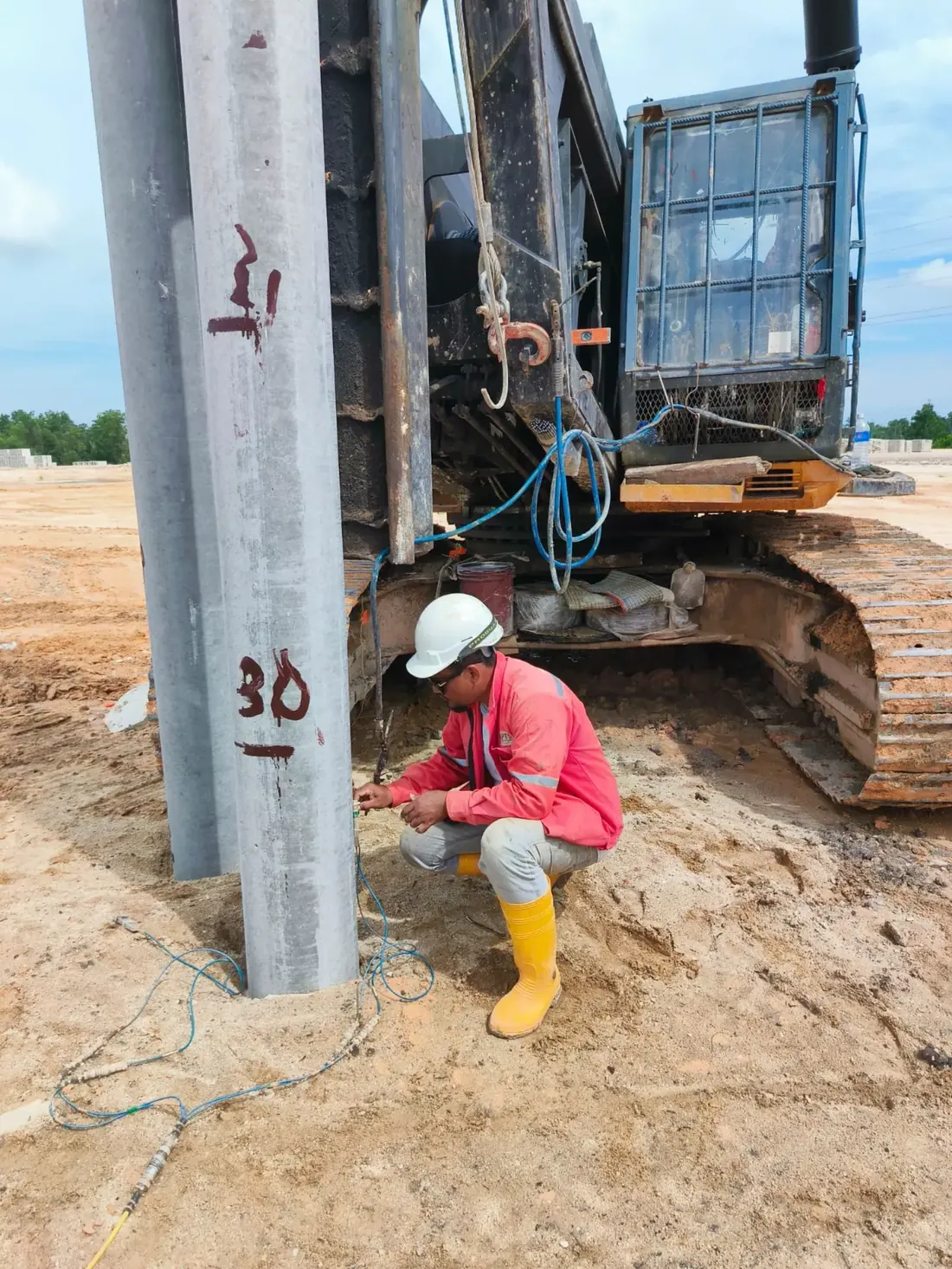
Good readings start with care in how the instruments are fitted and checked.
Before
we arrive.
Site access, pile details and the test specification shape the setup. Confirming these before mobilisation helps the crew prepare.
In your
report.
Measurements, test conditions and an assessment your project team can refer back to.
What does
your site need?
Different questions need different tests.
Start with your project requirements.
Foundation testing
PDAHigh Strain Dynamic Testing
Sensors record how a pile responds to a hammer or drop-weight impact. The measurements and analysis help assess pile bearing capacity, driving stresses and hammer performance.
High-strain dynamic testingEnquire about PDA testingPITLow Strain Integrity Test
A light hammer tap sends a stress wave through the pile. Its response helps assess continuity and identify possible changes in the shaft. PIT checks integrity; it does not measure bearing capacity.
Low-strain integrity testingEnquire about PIT testingMLTMaintained Load Test
Loads are applied to a pile in stages and held while settlement is measured. The results show how the pile responds to the specified test loads.
Enquire about load testingPBTPlate Bearing Test
A plate is loaded at the test location while its settlement is measured. The results help assess how the ground responds to loading for the specified application.
Enquire about plate bearing testsPOTPull-Out Test
An upward load is applied while movement is measured. The results help assess uplift resistance in tension piles and anchors under the specified test conditions.
Enquire about pull-out testsGround investigation
SISoil Investigation & Mackintosh Probe Test
Boreholes, soil sampling, Standard Penetration Tests and Mackintosh probing provide information about the ground below your site.
Enquire about soil investigationSite monitoring
24/7Real-Time Monitoring Station
For sites needing continuous noise and vibration records during construction.
Explore the monitoring stationSMSound Monitoring
Noise levels are measured and recorded for comparison with the limits applicable to your site. The readings help your team review site noise and monitoring requirements.
Enquire about sound monitoringVMVibration Monitoring
Vibration is measured at agreed monitoring locations, including peak particle velocity. The readings can be compared with the limits specified for the project.
Enquire about vibration monitoringYour site moves.
We keep watch.

Your site has neighbours. When piling starts, noise and vibration matter beyond the site boundary.
Discuss your monitoring needsLive readings
Open the remote dashboard from the office or the site hut.
Automated alerts
Receive an alert when a reading exceeds a threshold set for the site.
A record to return to
When questions come up later, return to the readings recorded at the time.
Experience that
runs deep.
Selected projects we’ve worked on, carrying out testing and monitoring for the contractors involved.
Behind every pile we test,
our engineers are there.
05 / Before we get started
A few things
worth knowing.
What the tests can tell you, where their limits are, and what happens next.
Talk to our teamFoundation testing
Can PDA testing replace a maintained load test?
PDA assesses capacity through dynamic measurements and analysis; a maintained load test measures movement under an applied static load. Which method is acceptable depends on the project specification and the consulting engineer’s requirements.
Can PIT rule out every pile defect?
No. Pile dimensions, material changes and surrounding soil can affect the response. Installation records and the soil profile help the engineer interpret the result. An integrity test also does not establish bearing capacity.
What determines the load stages and holding times for MLT?
The project’s testing specification sets the loading programme and assessment criteria. Share it before testing so the required loads, holding periods and readings can be planned.
Does one plate bearing test represent the whole site?
The result relates to the tested location and conditions. How it can be used elsewhere depends on the ground’s variability and engineering interpretation.
How does a pull-out test differ from a compression test?
A pull-out test loads a pile or anchor in tension, to assess resistance to uplift. A compression test applies load in the opposite direction. They address different loading requirements.
Ground investigation
What is the difference between boreholes and Mackintosh probing?
Boreholes allow the ground to be logged and soil samples to be taken. Mackintosh probing records the resistance as a cone is driven into the ground. It does not collect a soil sample.
Site monitoring
How are monitoring alert thresholds chosen?
Thresholds are set for the site using the applicable project requirements and limits. Share any monitoring specification or approval conditions when enquiring.
Explore the monitoring stationIs there one noise limit for every construction site?
No. The relevant limits depend on the receiving area, time period and applicable approval conditions. A monitoring plan needs to reflect the requirements for that site.
What does PPV mean in a vibration reading?
PPV stands for peak particle velocity, usually expressed in millimetres per second. It describes the highest vibration velocity measured during an event; it is not the amount of movement or settlement.
Planning your enquiry
Which test does my project need?
Start with the consulting engineer’s requirements or testing specification. If you’re unsure, send us the document and point out the part you need help with.
Start an enquiryCan I send a drawing or testing schedule?
Yes—attach it to your email or send it on WhatsApp. If it covers several services, let us know which ones you need quoted.
Does entering a preferred date confirm a booking?
No. It tells us the date you have in mind. Availability, site readiness and mobilisation arrangements still need to be agreed with our team.
Has this form sent my enquiry?
Not yet. It opens a draft in your email app or WhatsApp. Check the details, then press send there.
Let’s get
to work.
Talk to our office about your next job. For dates coming up soon, call +603 7880 2289.
- Call
- +603 7880 2289
- +6011 4393 2289
Your enquiry
Start with what you know.
Choose a service if you know it. Add a site location or date if you have one in mind.